
Mocha balayage hair color for short hair is the warm, dimensional brunette shade Pinterest is searching for most in 2026 — and on short hair, it adds the look of fullness without a harsh grow-out line. Here are 20 original ideas, each with who it suits, what to ask for, and how to care for it.
Mocha balayage for short hair works because it adds depth where short cuts often look flat, and it does it without the harsh line you get from a full colour or from foils that start right at the root. A mocha shade sits between chocolate brown and espresso, with warm, coffee-like tones that catch the light in small ribbons instead of one solid block of colour. On a bob, a pixie, a lob or a short shag, those ribbons make the cut look thicker, because your eye follows the lighter pieces through the layers and sees movement that a single colour cannot show. That is why so many people with fine hair choose this look first, and why stylists often suggest it when someone says their short hair looks thin, dull or hard to style in the morning. The colour is painted by hand, so the stylist can place lighter pieces where your hair naturally falls, around the face, at the ends, and through the crown, while keeping the roots darker and closer to your natural brown. That darker root is the part that makes the style easy to live with, because when your hair grows, there is no sharp line to hide, and you can wait longer between salon visits than you could with a root-to-tip colour.
In this guide you will find 20 different mocha balayage ideas for short hair, each one described in full, with who it suits, what to ask for, and how to care for it at home, so you can walk into the salon with a clear picture instead of a vague idea. The ideas below are all original, and they are grouped by cut and tone, so you can compare a chocolate mocha bob with an espresso mocha pixie and see which one fits your face shape, your skin tone and the amount of time you want to spend on upkeep each week.
The interest in this shade is not a small passing trend, and the numbers help explain why it keeps appearing on Pinterest boards and in salon chairs. Pinterest reported in its Beauty Trend Report in October 2026 that searches for mocha balayage hair were up 949% year on year, with soft copper blonde up 845% and cherry cola brunette up 788%, which shows that people are moving toward warm, dimensional brunette shades rather than flat, single-process colour. That shift matters for short hair in particular, because a short cut has less length to show off a colour change, so the colour has to work harder in a small space, and balayage does that by putting light and shadow side by side. A lived-in brunette finish, which is the same family as mocha balayage, is also up, with lived-in brunette hair searches rising 121% in the same report, and that points to the same wish: colour that looks natural, grows out softly, and does not need a salon visit every three weeks. In the Hair Highlights & Balayage pillar on this site you will find the full set of balayage guides, and in the Hair Color Ideas section you can compare mocha with chocolate brown, cherry cola and plum brunette before you decide.
If you are also thinking about the cut itself, the Short Hair Ideas section covers bobs, pixies, shags and bixie cuts in the same plain, helpful style. Before you book, read the two paragraphs under each idea below, because each one covers the practical side too: how often you will need a toner, what shampoo to use, how the colour will fade, and the exact words to use with your stylist so you leave with the shade you actually wanted.
Key Takeaways
- Mocha balayage uses warm chocolate and espresso ribbons on a darker brunette base, so short hair looks thicker and more dimensional.
- Keep the root darker than the ends for a soft, low-maintenance grow-out — most people wait 8 to 12 weeks between colour visits.
- Choose the tone by skin tone: warm mocha for warm skin, cool-toned mocha with an ash toner for cool skin that turns brassy easily.
- Book a toner every 6 to 12 weeks, wash with colour-safe shampoo, and trim every 6 to 8 weeks to keep short balayage clean.
- Bring photos and use the exact stylist wording in each idea — placement matters as much as the shade name.
- Pinterest reported mocha balayage searches up 949% year on year in October 2026, so this is a current, high-demand shade, not a one-season colour.
1. Chocolate Mocha Bob with Soft Layers

The chocolate mocha bob with soft layers works well when you want short hair with visible colour, because the chocolate mocha ribbons follow the shape of the chin-length bob with soft layers instead of sitting flat on top of it. Lighter pieces are placed where light hits first, around the face, through the top layers and at the ends, while the base stays a rich, darker mocha that gives the style depth. That contrast makes the hair look fuller, which helps fine to medium hair, because one flat colour can make thin hair look thinner, while two or three close mocha tones create the look of thickness without adding weight. This idea suits oval and heart-shaped faces best, and it works for warm and neutral skin tones, because warm coffee tones sit well against warm and neutral skin, and a stylist can cool the ribbons with an ash toner if your skin is cooler. For daily wear it is a safe, familiar look, smart enough for work and family events, yet fresh enough to feel current, because the balayage is soft and lived-in rather than striped or blocky. The cut helps the colour last too, because short hair is trimmed often and each trim removes the oldest ends where colour fades first, so the ribbons stay cleaner if you trim every six to eight weeks.
If you want a darker look for autumn or winter, mocha is a good middle step, darker than caramel blonde but lighter than jet black, with warmth but without strong red tones or the upkeep of very light blonde. Once the base is in place, you can change the shape later, from a bob to a lob or a shag, without starting the colour again, which makes this a useful first balayage. Bring two or three photos in daylight, point out whether you like the lighter ends, the face-framing pieces or the darker root most, and your stylist can place the colour where you will actually see it.
Ask your stylist for a chocolate mocha balayage on a chin-length bob, with soft layers through the ends and lighter ribbons around the face, and say it clearly at the start, because balayage depends on placement as much as on the shade name, and two stylists can mix different mochas from the same word. Bring a photo, ask for a strand test if you have used box colour before, and say how often you can return, because that changes the plan: if you can only visit every ten to twelve weeks, ask for a darker root shadow and softer ribbons. Maintenance is low to medium, so wash two to three times a week with a colour-safe shampoo, use lukewarm water, and book a toner every 8 to 10 weeks to stop the ribbons turning brassy, especially if you swim, use heat often, or spend time in strong sun. A weekly mask and a heat protectant before a straightener or curling iron will help the colour stay rich, and you should avoid clarifying shampoo at every wash, because it strips toner faster than a gentle, sulphate-free wash. Grow-out is forgiving here, because the root stays dark and the balayage starts lower down, so new growth blends in instead of showing a hard line, and most people wait eight to twelve weeks between colour visits, with only a toner and a trim in between.
At home, use a round brush on low heat for a smooth finish, or sea salt spray and a quick scrunch for a wavy, lived-in look, and let the layers do the work instead of piling on wax or oil, which can weigh short hair down and hide the dimension. If the colour turns warm after a few weeks, do not fix it with a box dye, which can patch the balayage and make the next salon visit harder; book a gloss or toner instead, which takes about twenty minutes and restores the tone you started with. Ask for a clear price before the service, including toner and cut, because cost varies by salon, city and hair thickness, and ask what a toner-only visit costs so you can plan the upkeep. Keep a daylight photo after the appointment, compare it after four weeks, and show your stylist how it faded, so the next toner and timing can be chosen with real evidence rather than guesswork.
2. Espresso Mocha Pixie with Face-Framing Highlights
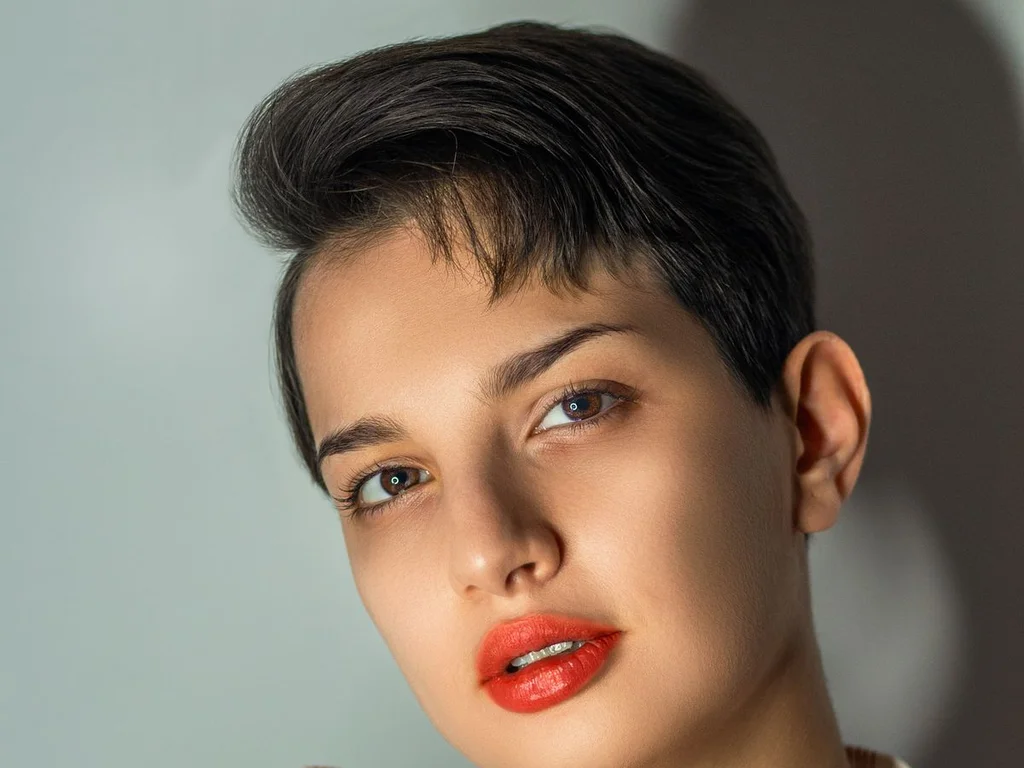
The espresso mocha pixie with face-framing highlights works well when you want short hair with visible colour, because the espresso mocha ribbons follow the shape of the textured pixie with longer pieces at the front instead of sitting flat on top of it. Lighter pieces are placed where light hits first, around the face, through the top layers and at the ends, while the base stays a rich, darker mocha that gives the style depth. That contrast makes the hair look fuller, which helps thick hair that needs weight removed, because one flat colour can make thin hair look thinner, while two or three close mocha tones create the look of thickness without adding weight. This idea suits round and square faces best, and it works for cool and neutral skin tones, because warm coffee tones sit well against warm and neutral skin, and a stylist can cool the ribbons with an ash toner if your skin is cooler. For daily wear it is a safe, familiar look, smart enough for work and family events, yet fresh enough to feel current, because the balayage is soft and lived-in rather than striped or blocky. The cut helps the colour last too, because short hair is trimmed often and each trim removes the oldest ends where colour fades first, so the ribbons stay cleaner if you trim every six to eight weeks.
If you want a darker look for autumn or winter, mocha is a good middle step, darker than caramel blonde but lighter than jet black, with warmth but without strong red tones or the upkeep of very light blonde. Once the base is in place, you can change the shape later, from a bob to a lob or a shag, without starting the colour again, which makes this a useful first balayage. Bring two or three photos in daylight, point out whether you like the lighter ends, the face-framing pieces or the darker root most, and your stylist can place the colour where you will actually see it.
Ask your stylist for an espresso mocha base with face-framing highlights on a textured pixie, keeping the front pieces longer, and say it clearly at the start, because balayage depends on placement as much as on the shade name, and two stylists can mix different mochas from the same word. Bring a photo, ask for a strand test if you have used box colour before, and say how often you can return, because that changes the plan: if you can only visit every ten to twelve weeks, ask for a darker root shadow and softer ribbons. Maintenance is medium, so wash two to three times a week with a colour-safe shampoo, use lukewarm water, and book a toner every 6 to 8 weeks to stop the ribbons turning brassy, especially if you swim, use heat often, or spend time in strong sun. A weekly mask and a heat protectant before a straightener or curling iron will help the colour stay rich, and you should avoid clarifying shampoo at every wash, because it strips toner faster than a gentle, sulphate-free wash. Grow-out is forgiving here, because the root stays dark and the balayage starts lower down, so new growth blends in instead of showing a hard line, and most people wait eight to twelve weeks between colour visits, with only a toner and a trim in between.
At home, use a round brush on low heat for a smooth finish, or sea salt spray and a quick scrunch for a wavy, lived-in look, and let the layers do the work instead of piling on wax or oil, which can weigh short hair down and hide the dimension. If the colour turns warm after a few weeks, do not fix it with a box dye, which can patch the balayage and make the next salon visit harder; book a gloss or toner instead, which takes about twenty minutes and restores the tone you started with. Ask for a clear price before the service, including toner and cut, because cost varies by salon, city and hair thickness, and ask what a toner-only visit costs so you can plan the upkeep. Keep a daylight photo after the appointment, compare it after four weeks, and show your stylist how it faded, so the next toner and timing can be chosen with real evidence rather than guesswork.
3. Caramel Mocha Lob with Gentle Waves
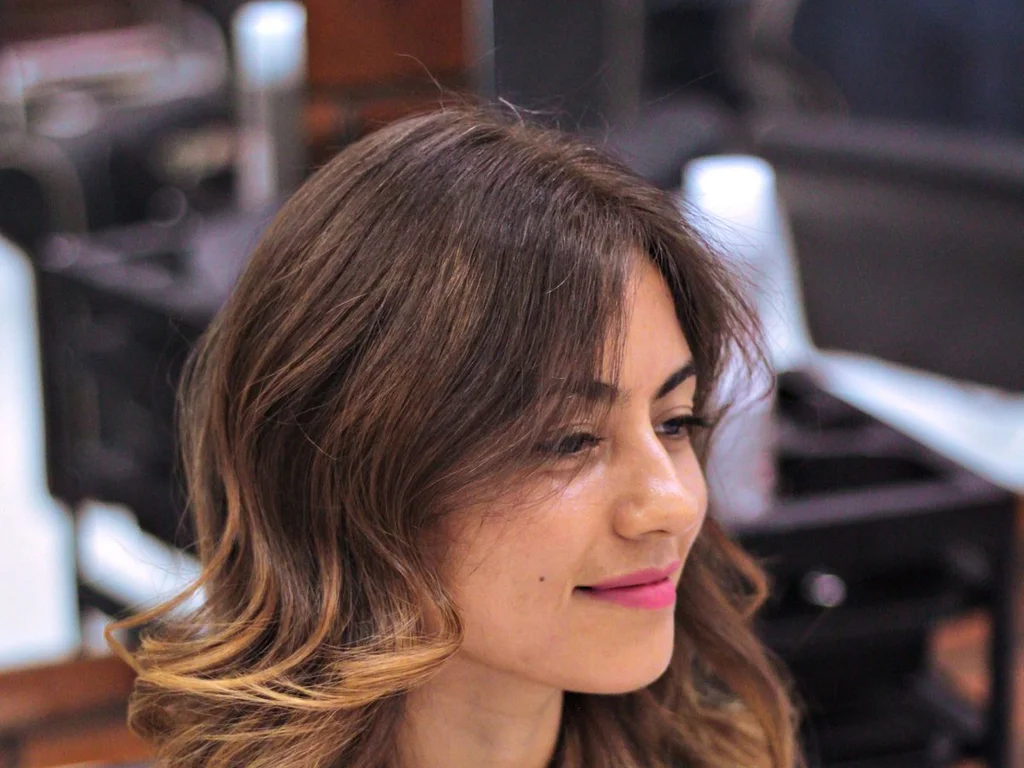
The caramel mocha lob with gentle waves works well when you want short hair with visible colour, because the caramel mocha ribbons follow the shape of the collarbone-length lob with gentle waves instead of sitting flat on top of it. Lighter pieces are placed where light hits first, around the face, through the top layers and at the ends, while the base stays a rich, darker mocha that gives the style depth. That contrast makes the hair look fuller, which helps medium to thick hair, because one flat colour can make thin hair look thinner, while two or three close mocha tones create the look of thickness without adding weight. This idea suits long and oval faces best, and it works for warm skin tones with golden undertones, because warm coffee tones sit well against warm and neutral skin, and a stylist can cool the ribbons with an ash toner if your skin is cooler. For daily wear it is a safe, familiar look, smart enough for work and family events, yet fresh enough to feel current, because the balayage is soft and lived-in rather than striped or blocky. The cut helps the colour last too, because short hair is trimmed often and each trim removes the oldest ends where colour fades first, so the ribbons stay cleaner if you trim every six to eight weeks.
If you want a darker look for autumn or winter, mocha is a good middle step, darker than caramel blonde but lighter than jet black, with warmth but without strong red tones or the upkeep of very light blonde. Once the base is in place, you can change the shape later, from a bob to a lob or a shag, without starting the colour again, which makes this a useful first balayage. Bring two or three photos in daylight, point out whether you like the lighter ends, the face-framing pieces or the darker root most, and your stylist can place the colour where you will actually see it.
Ask your stylist for a caramel mocha balayage on a lob, with soft waves and lighter ends that catch the light, and say it clearly at the start, because balayage depends on placement as much as on the shade name, and two stylists can mix different mochas from the same word. Bring a photo, ask for a strand test if you have used box colour before, and say how often you can return, because that changes the plan: if you can only visit every ten to twelve weeks, ask for a darker root shadow and softer ribbons. Maintenance is low, so wash two to three times a week with a colour-safe shampoo, use lukewarm water, and book a toner every 8 to 12 weeks to stop the ribbons turning brassy, especially if you swim, use heat often, or spend time in strong sun. A weekly mask and a heat protectant before a straightener or curling iron will help the colour stay rich, and you should avoid clarifying shampoo at every wash, because it strips toner faster than a gentle, sulphate-free wash. Grow-out is forgiving here, because the root stays dark and the balayage starts lower down, so new growth blends in instead of showing a hard line, and most people wait eight to twelve weeks between colour visits, with only a toner and a trim in between.
At home, use a round brush on low heat for a smooth finish, or sea salt spray and a quick scrunch for a wavy, lived-in look, and let the layers do the work instead of piling on wax or oil, which can weigh short hair down and hide the dimension. If the colour turns warm after a few weeks, do not fix it with a box dye, which can patch the balayage and make the next salon visit harder; book a gloss or toner instead, which takes about twenty minutes and restores the tone you started with. Ask for a clear price before the service, including toner and cut, because cost varies by salon, city and hair thickness, and ask what a toner-only visit costs so you can plan the upkeep. Keep a daylight photo after the appointment, compare it after four weeks, and show your stylist how it faded, so the next toner and timing can be chosen with real evidence rather than guesswork.
4. Soft Mocha French Bob with Blunt Ends

The soft mocha french bob with blunt ends works well when you want short hair with visible colour, because the soft mocha ribbons follow the shape of the French bob with blunt ends just below the jaw instead of sitting flat on top of it. Lighter pieces are placed where light hits first, around the face, through the top layers and at the ends, while the base stays a rich, darker mocha that gives the style depth. That contrast makes the hair look fuller, which helps straight, fine hair, because one flat colour can make thin hair look thinner, while two or three close mocha tones create the look of thickness without adding weight. This idea suits oval and square faces best, and it works for fair to medium skin tones, because warm coffee tones sit well against warm and neutral skin, and a stylist can cool the ribbons with an ash toner if your skin is cooler. For daily wear it is a safe, familiar look, smart enough for work and family events, yet fresh enough to feel current, because the balayage is soft and lived-in rather than striped or blocky. The cut helps the colour last too, because short hair is trimmed often and each trim removes the oldest ends where colour fades first, so the ribbons stay cleaner if you trim every six to eight weeks.
If you want a darker look for autumn or winter, mocha is a good middle step, darker than caramel blonde but lighter than jet black, with warmth but without strong red tones or the upkeep of very light blonde. Once the base is in place, you can change the shape later, from a bob to a lob or a shag, without starting the colour again, which makes this a useful first balayage. Bring two or three photos in daylight, point out whether you like the lighter ends, the face-framing pieces or the darker root most, and your stylist can place the colour where you will actually see it.
Ask your stylist for a soft mocha balayage on a French bob with blunt ends, keeping the colour close to your natural brown, and say it clearly at the start, because balayage depends on placement as much as on the shade name, and two stylists can mix different mochas from the same word. Bring a photo, ask for a strand test if you have used box colour before, and say how often you can return, because that changes the plan: if you can only visit every ten to twelve weeks, ask for a darker root shadow and softer ribbons. Maintenance is low, so wash two to three times a week with a colour-safe shampoo, use lukewarm water, and book a toner every 10 to 12 weeks to stop the ribbons turning brassy, especially if you swim, use heat often, or spend time in strong sun. A weekly mask and a heat protectant before a straightener or curling iron will help the colour stay rich, and you should avoid clarifying shampoo at every wash, because it strips toner faster than a gentle, sulphate-free wash. Grow-out is forgiving here, because the root stays dark and the balayage starts lower down, so new growth blends in instead of showing a hard line, and most people wait eight to twelve weeks between colour visits, with only a toner and a trim in between.
At home, use a round brush on low heat for a smooth finish, or sea salt spray and a quick scrunch for a wavy, lived-in look, and let the layers do the work instead of piling on wax or oil, which can weigh short hair down and hide the dimension. If the colour turns warm after a few weeks, do not fix it with a box dye, which can patch the balayage and make the next salon visit harder; book a gloss or toner instead, which takes about twenty minutes and restores the tone you started with. Ask for a clear price before the service, including toner and cut, because cost varies by salon, city and hair thickness, and ask what a toner-only visit costs so you can plan the upkeep. Keep a daylight photo after the appointment, compare it after four weeks, and show your stylist how it faded, so the next toner and timing can be chosen with real evidence rather than guesswork.
5. Dark Mocha Curly Bob with Warm Ribbons
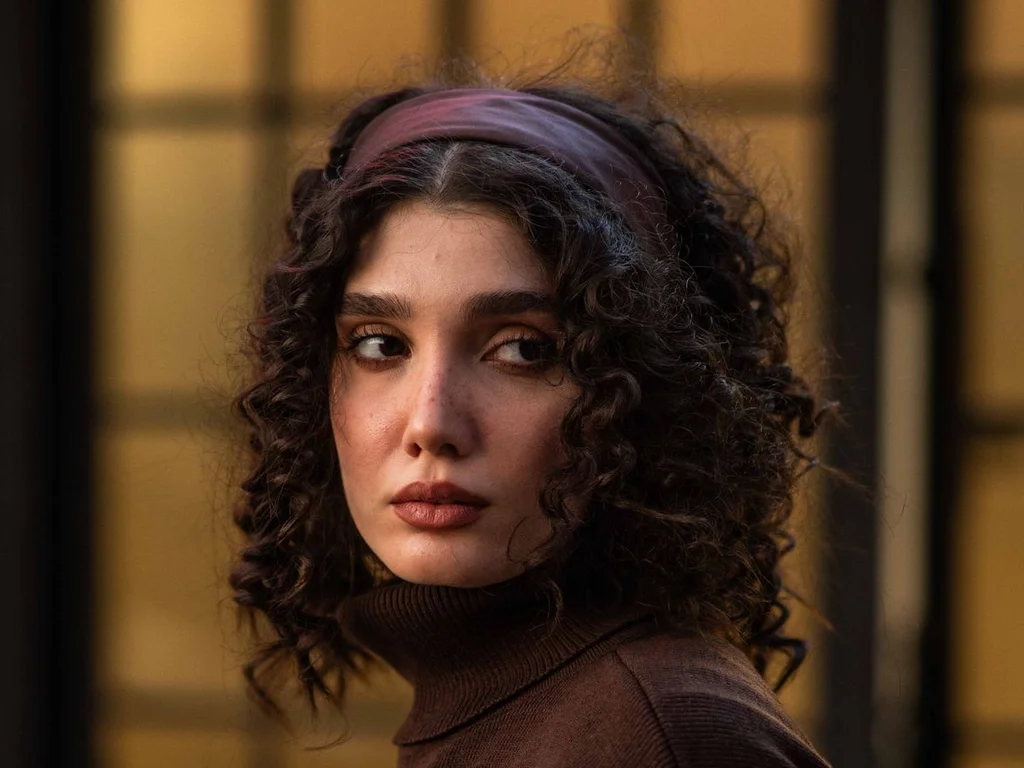
The dark mocha curly bob with warm ribbons works well when you want short hair with visible colour, because the dark mocha ribbons follow the shape of the chin-length curly bob with warm ribbons through the curls instead of sitting flat on top of it. Lighter pieces are placed where light hits first, around the face, through the top layers and at the ends, while the base stays a rich, darker mocha that gives the style depth. That contrast makes the hair look fuller, which helps naturally curly hair, type 3A to 3C, because one flat colour can make thin hair look thinner, while two or three close mocha tones create the look of thickness without adding weight. This idea suits heart-shaped and oval faces best, and it works for medium to deep skin tones, because warm coffee tones sit well against warm and neutral skin, and a stylist can cool the ribbons with an ash toner if your skin is cooler. For daily wear it is a safe, familiar look, smart enough for work and family events, yet fresh enough to feel current, because the balayage is soft and lived-in rather than striped or blocky. The cut helps the colour last too, because short hair is trimmed often and each trim removes the oldest ends where colour fades first, so the ribbons stay cleaner if you trim every six to eight weeks.
If you want a darker look for autumn or winter, mocha is a good middle step, darker than caramel blonde but lighter than jet black, with warmth but without strong red tones or the upkeep of very light blonde. Once the base is in place, you can change the shape later, from a bob to a lob or a shag, without starting the colour again, which makes this a useful first balayage. Bring two or three photos in daylight, point out whether you like the lighter ends, the face-framing pieces or the darker root most, and your stylist can place the colour where you will actually see it.
Ask your stylist for a dark mocha balayage painted on the outer curls of a chin-length bob, so the ribbons show when the curls move, and say it clearly at the start, because balayage depends on placement as much as on the shade name, and two stylists can mix different mochas from the same word. Bring a photo, ask for a strand test if you have used box colour before, and say how often you can return, because that changes the plan: if you can only visit every ten to twelve weeks, ask for a darker root shadow and softer ribbons. Maintenance is medium, so wash two to three times a week with a colour-safe shampoo, use lukewarm water, and book a toner every 8 to 10 weeks to stop the ribbons turning brassy, especially if you swim, use heat often, or spend time in strong sun. A weekly mask and a heat protectant before a straightener or curling iron will help the colour stay rich, and you should avoid clarifying shampoo at every wash, because it strips toner faster than a gentle, sulphate-free wash. Grow-out is forgiving here, because the root stays dark and the balayage starts lower down, so new growth blends in instead of showing a hard line, and most people wait eight to twelve weeks between colour visits, with only a toner and a trim in between.
At home, use a round brush on low heat for a smooth finish, or sea salt spray and a quick scrunch for a wavy, lived-in look, and let the layers do the work instead of piling on wax or oil, which can weigh short hair down and hide the dimension. If the colour turns warm after a few weeks, do not fix it with a box dye, which can patch the balayage and make the next salon visit harder; book a gloss or toner instead, which takes about twenty minutes and restores the tone you started with. Ask for a clear price before the service, including toner and cut, because cost varies by salon, city and hair thickness, and ask what a toner-only visit costs so you can plan the upkeep. Keep a daylight photo after the appointment, compare it after four weeks, and show your stylist how it faded, so the next toner and timing can be chosen with real evidence rather than guesswork.
6. Mocha Balayage Shag with Curtain Bangs

The mocha balayage shag with curtain bangs works well when you want short hair with visible colour, because the warm mocha ribbons follow the shape of the short shag with curtain bangs and choppy layers instead of sitting flat on top of it. Lighter pieces are placed where light hits first, around the face, through the top layers and at the ends, while the base stays a rich, darker mocha that gives the style depth. That contrast makes the hair look fuller, which helps wavy hair that needs shape, because one flat colour can make thin hair look thinner, while two or three close mocha tones create the look of thickness without adding weight. This idea suits round and heart-shaped faces best, and it works for warm and neutral skin tones, because warm coffee tones sit well against warm and neutral skin, and a stylist can cool the ribbons with an ash toner if your skin is cooler. For daily wear it is a safe, familiar look, smart enough for work and family events, yet fresh enough to feel current, because the balayage is soft and lived-in rather than striped or blocky. The cut helps the colour last too, because short hair is trimmed often and each trim removes the oldest ends where colour fades first, so the ribbons stay cleaner if you trim every six to eight weeks.
If you want a darker look for autumn or winter, mocha is a good middle step, darker than caramel blonde but lighter than jet black, with warmth but without strong red tones or the upkeep of very light blonde. Once the base is in place, you can change the shape later, from a bob to a lob or a shag, without starting the colour again, which makes this a useful first balayage. Bring two or three photos in daylight, point out whether you like the lighter ends, the face-framing pieces or the darker root most, and your stylist can place the colour where you will actually see it.
Ask your stylist for a warm mocha balayage on a short shag with curtain bangs, with lighter pieces around the bangs and ends, and say it clearly at the start, because balayage depends on placement as much as on the shade name, and two stylists can mix different mochas from the same word. Bring a photo, ask for a strand test if you have used box colour before, and say how often you can return, because that changes the plan: if you can only visit every ten to twelve weeks, ask for a darker root shadow and softer ribbons. Maintenance is low to medium, so wash two to three times a week with a colour-safe shampoo, use lukewarm water, and book a toner every 8 to 10 weeks to stop the ribbons turning brassy, especially if you swim, use heat often, or spend time in strong sun. A weekly mask and a heat protectant before a straightener or curling iron will help the colour stay rich, and you should avoid clarifying shampoo at every wash, because it strips toner faster than a gentle, sulphate-free wash. Grow-out is forgiving here, because the root stays dark and the balayage starts lower down, so new growth blends in instead of showing a hard line, and most people wait eight to twelve weeks between colour visits, with only a toner and a trim in between.
At home, use a round brush on low heat for a smooth finish, or sea salt spray and a quick scrunch for a wavy, lived-in look, and let the layers do the work instead of piling on wax or oil, which can weigh short hair down and hide the dimension. If the colour turns warm after a few weeks, do not fix it with a box dye, which can patch the balayage and make the next salon visit harder; book a gloss or toner instead, which takes about twenty minutes and restores the tone you started with. Ask for a clear price before the service, including toner and cut, because cost varies by salon, city and hair thickness, and ask what a toner-only visit costs so you can plan the upkeep. Keep a daylight photo after the appointment, compare it after four weeks, and show your stylist how it faded, so the next toner and timing can be chosen with real evidence rather than guesswork.
7. Light Mocha Bixie with Textured Top

The light mocha bixie with textured top works well when you want short hair with visible colour, because the light mocha ribbons follow the shape of the bixie, between a pixie and a bob, with a textured top instead of sitting flat on top of it. Lighter pieces are placed where light hits first, around the face, through the top layers and at the ends, while the base stays a rich, darker mocha that gives the style depth. That contrast makes the hair look fuller, which helps fine hair that falls flat at the crown, because one flat colour can make thin hair look thinner, while two or three close mocha tones create the look of thickness without adding weight. This idea suits oval and long faces best, and it works for fair to medium skin tones, because warm coffee tones sit well against warm and neutral skin, and a stylist can cool the ribbons with an ash toner if your skin is cooler. For daily wear it is a safe, familiar look, smart enough for work and family events, yet fresh enough to feel current, because the balayage is soft and lived-in rather than striped or blocky. The cut helps the colour last too, because short hair is trimmed often and each trim removes the oldest ends where colour fades first, so the ribbons stay cleaner if you trim every six to eight weeks.
If you want a darker look for autumn or winter, mocha is a good middle step, darker than caramel blonde but lighter than jet black, with warmth but without strong red tones or the upkeep of very light blonde. Once the base is in place, you can change the shape later, from a bob to a lob or a shag, without starting the colour again, which makes this a useful first balayage. Bring two or three photos in daylight, point out whether you like the lighter ends, the face-framing pieces or the darker root most, and your stylist can place the colour where you will actually see it.
Ask your stylist for a light mocha balayage on a bixie, with texture on top and a soft, lived-in finish at the ends, and say it clearly at the start, because balayage depends on placement as much as on the shade name, and two stylists can mix different mochas from the same word. Bring a photo, ask for a strand test if you have used box colour before, and say how often you can return, because that changes the plan: if you can only visit every ten to twelve weeks, ask for a darker root shadow and softer ribbons. Maintenance is medium, so wash two to three times a week with a colour-safe shampoo, use lukewarm water, and book a toner every 6 to 8 weeks to stop the ribbons turning brassy, especially if you swim, use heat often, or spend time in strong sun. A weekly mask and a heat protectant before a straightener or curling iron will help the colour stay rich, and you should avoid clarifying shampoo at every wash, because it strips toner faster than a gentle, sulphate-free wash. Grow-out is forgiving here, because the root stays dark and the balayage starts lower down, so new growth blends in instead of showing a hard line, and most people wait eight to twelve weeks between colour visits, with only a toner and a trim in between.
At home, use a round brush on low heat for a smooth finish, or sea salt spray and a quick scrunch for a wavy, lived-in look, and let the layers do the work instead of piling on wax or oil, which can weigh short hair down and hide the dimension. If the colour turns warm after a few weeks, do not fix it with a box dye, which can patch the balayage and make the next salon visit harder; book a gloss or toner instead, which takes about twenty minutes and restores the tone you started with. Ask for a clear price before the service, including toner and cut, because cost varies by salon, city and hair thickness, and ask what a toner-only visit costs so you can plan the upkeep. Keep a daylight photo after the appointment, compare it after four weeks, and show your stylist how it faded, so the next toner and timing can be chosen with real evidence rather than guesswork.
8. Chocolate Mocha Stacked Bob with Volume

The chocolate mocha stacked bob with volume works well when you want short hair with visible colour, because the chocolate mocha ribbons follow the shape of the stacked bob with shorter layers at the back and longer front instead of sitting flat on top of it. Lighter pieces are placed where light hits first, around the face, through the top layers and at the ends, while the base stays a rich, darker mocha that gives the style depth. That contrast makes the hair look fuller, which helps fine to medium hair that needs lift at the back, because one flat colour can make thin hair look thinner, while two or three close mocha tones create the look of thickness without adding weight. This idea suits round and square faces best, and it works for warm and neutral skin tones, because warm coffee tones sit well against warm and neutral skin, and a stylist can cool the ribbons with an ash toner if your skin is cooler. For daily wear it is a safe, familiar look, smart enough for work and family events, yet fresh enough to feel current, because the balayage is soft and lived-in rather than striped or blocky. The cut helps the colour last too, because short hair is trimmed often and each trim removes the oldest ends where colour fades first, so the ribbons stay cleaner if you trim every six to eight weeks.
If you want a darker look for autumn or winter, mocha is a good middle step, darker than caramel blonde but lighter than jet black, with warmth but without strong red tones or the upkeep of very light blonde. Once the base is in place, you can change the shape later, from a bob to a lob or a shag, without starting the colour again, which makes this a useful first balayage. Bring two or three photos in daylight, point out whether you like the lighter ends, the face-framing pieces or the darker root most, and your stylist can place the colour where you will actually see it.
Ask your stylist for a chocolate mocha balayage on a stacked bob, with more lift at the back and lighter ribbons at the front, and say it clearly at the start, because balayage depends on placement as much as on the shade name, and two stylists can mix different mochas from the same word. Bring a photo, ask for a strand test if you have used box colour before, and say how often you can return, because that changes the plan: if you can only visit every ten to twelve weeks, ask for a darker root shadow and softer ribbons. Maintenance is low to medium, so wash two to three times a week with a colour-safe shampoo, use lukewarm water, and book a toner every 8 to 10 weeks to stop the ribbons turning brassy, especially if you swim, use heat often, or spend time in strong sun. A weekly mask and a heat protectant before a straightener or curling iron will help the colour stay rich, and you should avoid clarifying shampoo at every wash, because it strips toner faster than a gentle, sulphate-free wash. Grow-out is forgiving here, because the root stays dark and the balayage starts lower down, so new growth blends in instead of showing a hard line, and most people wait eight to twelve weeks between colour visits, with only a toner and a trim in between.
At home, use a round brush on low heat for a smooth finish, or sea salt spray and a quick scrunch for a wavy, lived-in look, and let the layers do the work instead of piling on wax or oil, which can weigh short hair down and hide the dimension. If the colour turns warm after a few weeks, do not fix it with a box dye, which can patch the balayage and make the next salon visit harder; book a gloss or toner instead, which takes about twenty minutes and restores the tone you started with. Ask for a clear price before the service, including toner and cut, because cost varies by salon, city and hair thickness, and ask what a toner-only visit costs so you can plan the upkeep. Keep a daylight photo after the appointment, compare it after four weeks, and show your stylist how it faded, so the next toner and timing can be chosen with real evidence rather than guesswork.
9. Espresso Mocha Bob with Side Part

The espresso mocha bob with side part works well when you want short hair with visible colour, because the espresso mocha ribbons follow the shape of the sleek bob with a deep side part instead of sitting flat on top of it. Lighter pieces are placed where light hits first, around the face, through the top layers and at the ends, while the base stays a rich, darker mocha that gives the style depth. That contrast makes the hair look fuller, which helps straight, smooth hair, because one flat colour can make thin hair look thinner, while two or three close mocha tones create the look of thickness without adding weight. This idea suits oval and heart-shaped faces best, and it works for cool skin tones, because warm coffee tones sit well against warm and neutral skin, and a stylist can cool the ribbons with an ash toner if your skin is cooler. For daily wear it is a safe, familiar look, smart enough for work and family events, yet fresh enough to feel current, because the balayage is soft and lived-in rather than striped or blocky. The cut helps the colour last too, because short hair is trimmed often and each trim removes the oldest ends where colour fades first, so the ribbons stay cleaner if you trim every six to eight weeks.
If you want a darker look for autumn or winter, mocha is a good middle step, darker than caramel blonde but lighter than jet black, with warmth but without strong red tones or the upkeep of very light blonde. Once the base is in place, you can change the shape later, from a bob to a lob or a shag, without starting the colour again, which makes this a useful first balayage. Bring two or three photos in daylight, point out whether you like the lighter ends, the face-framing pieces or the darker root most, and your stylist can place the colour where you will actually see it.
Ask your stylist for an espresso mocha balayage on a sleek bob with a deep side part, keeping the colour rich and glossy, and say it clearly at the start, because balayage depends on placement as much as on the shade name, and two stylists can mix different mochas from the same word. Bring a photo, ask for a strand test if you have used box colour before, and say how often you can return, because that changes the plan: if you can only visit every ten to twelve weeks, ask for a darker root shadow and softer ribbons. Maintenance is low, so wash two to three times a week with a colour-safe shampoo, use lukewarm water, and book a toner every 10 to 12 weeks to stop the ribbons turning brassy, especially if you swim, use heat often, or spend time in strong sun. A weekly mask and a heat protectant before a straightener or curling iron will help the colour stay rich, and you should avoid clarifying shampoo at every wash, because it strips toner faster than a gentle, sulphate-free wash. Grow-out is forgiving here, because the root stays dark and the balayage starts lower down, so new growth blends in instead of showing a hard line, and most people wait eight to twelve weeks between colour visits, with only a toner and a trim in between.
At home, use a round brush on low heat for a smooth finish, or sea salt spray and a quick scrunch for a wavy, lived-in look, and let the layers do the work instead of piling on wax or oil, which can weigh short hair down and hide the dimension. If the colour turns warm after a few weeks, do not fix it with a box dye, which can patch the balayage and make the next salon visit harder; book a gloss or toner instead, which takes about twenty minutes and restores the tone you started with. Ask for a clear price before the service, including toner and cut, because cost varies by salon, city and hair thickness, and ask what a toner-only visit costs so you can plan the upkeep. Keep a daylight photo after the appointment, compare it after four weeks, and show your stylist how it faded, so the next toner and timing can be chosen with real evidence rather than guesswork.
10. Caramel Mocha Wavy Bob for Fine Hair

The caramel mocha wavy bob for fine hair works well when you want short hair with visible colour, because the caramel mocha ribbons follow the shape of the wavy bob cut to add width and movement instead of sitting flat on top of it. Lighter pieces are placed where light hits first, around the face, through the top layers and at the ends, while the base stays a rich, darker mocha that gives the style depth. That contrast makes the hair look fuller, which helps fine hair that looks thin when it is one flat colour, because one flat colour can make thin hair look thinner, while two or three close mocha tones create the look of thickness without adding weight. This idea suits long and oval faces best, and it works for warm skin tones, because warm coffee tones sit well against warm and neutral skin, and a stylist can cool the ribbons with an ash toner if your skin is cooler. For daily wear it is a safe, familiar look, smart enough for work and family events, yet fresh enough to feel current, because the balayage is soft and lived-in rather than striped or blocky. The cut helps the colour last too, because short hair is trimmed often and each trim removes the oldest ends where colour fades first, so the ribbons stay cleaner if you trim every six to eight weeks.
If you want a darker look for autumn or winter, mocha is a good middle step, darker than caramel blonde but lighter than jet black, with warmth but without strong red tones or the upkeep of very light blonde. Once the base is in place, you can change the shape later, from a bob to a lob or a shag, without starting the colour again, which makes this a useful first balayage. Bring two or three photos in daylight, point out whether you like the lighter ends, the face-framing pieces or the darker root most, and your stylist can place the colour where you will actually see it.
Ask your stylist for a caramel mocha balayage on a wavy bob, with the lightest pieces at the mid-lengths to create the look of thickness, and say it clearly at the start, because balayage depends on placement as much as on the shade name, and two stylists can mix different mochas from the same word. Bring a photo, ask for a strand test if you have used box colour before, and say how often you can return, because that changes the plan: if you can only visit every ten to twelve weeks, ask for a darker root shadow and softer ribbons. Maintenance is low, so wash two to three times a week with a colour-safe shampoo, use lukewarm water, and book a toner every 8 to 12 weeks to stop the ribbons turning brassy, especially if you swim, use heat often, or spend time in strong sun. A weekly mask and a heat protectant before a straightener or curling iron will help the colour stay rich, and you should avoid clarifying shampoo at every wash, because it strips toner faster than a gentle, sulphate-free wash. Grow-out is forgiving here, because the root stays dark and the balayage starts lower down, so new growth blends in instead of showing a hard line, and most people wait eight to twelve weeks between colour visits, with only a toner and a trim in between.
At home, use a round brush on low heat for a smooth finish, or sea salt spray and a quick scrunch for a wavy, lived-in look, and let the layers do the work instead of piling on wax or oil, which can weigh short hair down and hide the dimension. If the colour turns warm after a few weeks, do not fix it with a box dye, which can patch the balayage and make the next salon visit harder; book a gloss or toner instead, which takes about twenty minutes and restores the tone you started with. Ask for a clear price before the service, including toner and cut, because cost varies by salon, city and hair thickness, and ask what a toner-only visit costs so you can plan the upkeep. Keep a daylight photo after the appointment, compare it after four weeks, and show your stylist how it faded, so the next toner and timing can be chosen with real evidence rather than guesswork.
11. Soft Mocha Bob with Money Piece Highlights

The soft mocha bob with money piece highlights works well when you want short hair with visible colour, because the soft mocha ribbons follow the shape of the bob with bright money piece highlights at the front instead of sitting flat on top of it. Lighter pieces are placed where light hits first, around the face, through the top layers and at the ends, while the base stays a rich, darker mocha that gives the style depth. That contrast makes the hair look fuller, which helps straight to wavy hair, because one flat colour can make thin hair look thinner, while two or three close mocha tones create the look of thickness without adding weight. This idea suits oval and round faces best, and it works for fair to medium skin tones, because warm coffee tones sit well against warm and neutral skin, and a stylist can cool the ribbons with an ash toner if your skin is cooler. For daily wear it is a safe, familiar look, smart enough for work and family events, yet fresh enough to feel current, because the balayage is soft and lived-in rather than striped or blocky. The cut helps the colour last too, because short hair is trimmed often and each trim removes the oldest ends where colour fades first, so the ribbons stay cleaner if you trim every six to eight weeks.
If you want a darker look for autumn or winter, mocha is a good middle step, darker than caramel blonde but lighter than jet black, with warmth but without strong red tones or the upkeep of very light blonde. Once the base is in place, you can change the shape later, from a bob to a lob or a shag, without starting the colour again, which makes this a useful first balayage. Bring two or three photos in daylight, point out whether you like the lighter ends, the face-framing pieces or the darker root most, and your stylist can place the colour where you will actually see it.
Ask your stylist for a soft mocha balayage with a money piece at the front, so the face looks brighter without lightening all of the hair, and say it clearly at the start, because balayage depends on placement as much as on the shade name, and two stylists can mix different mochas from the same word. Bring a photo, ask for a strand test if you have used box colour before, and say how often you can return, because that changes the plan: if you can only visit every ten to twelve weeks, ask for a darker root shadow and softer ribbons. Maintenance is medium, so wash two to three times a week with a colour-safe shampoo, use lukewarm water, and book a toner every 6 to 8 weeks to stop the ribbons turning brassy, especially if you swim, use heat often, or spend time in strong sun. A weekly mask and a heat protectant before a straightener or curling iron will help the colour stay rich, and you should avoid clarifying shampoo at every wash, because it strips toner faster than a gentle, sulphate-free wash. Grow-out is forgiving here, because the root stays dark and the balayage starts lower down, so new growth blends in instead of showing a hard line, and most people wait eight to twelve weeks between colour visits, with only a toner and a trim in between.
At home, use a round brush on low heat for a smooth finish, or sea salt spray and a quick scrunch for a wavy, lived-in look, and let the layers do the work instead of piling on wax or oil, which can weigh short hair down and hide the dimension. If the colour turns warm after a few weeks, do not fix it with a box dye, which can patch the balayage and make the next salon visit harder; book a gloss or toner instead, which takes about twenty minutes and restores the tone you started with. Ask for a clear price before the service, including toner and cut, because cost varies by salon, city and hair thickness, and ask what a toner-only visit costs so you can plan the upkeep. Keep a daylight photo after the appointment, compare it after four weeks, and show your stylist how it faded, so the next toner and timing can be chosen with real evidence rather than guesswork.
12. Dark Mocha Pixie Bob with Tapered Sides

The dark mocha pixie bob with tapered sides works well when you want short hair with visible colour, because the dark mocha ribbons follow the shape of the pixie bob with tapered sides and length on top instead of sitting flat on top of it. Lighter pieces are placed where light hits first, around the face, through the top layers and at the ends, while the base stays a rich, darker mocha that gives the style depth. That contrast makes the hair look fuller, which helps thick, straight hair, because one flat colour can make thin hair look thinner, while two or three close mocha tones create the look of thickness without adding weight. This idea suits square and oval faces best, and it works for medium to deep skin tones, because warm coffee tones sit well against warm and neutral skin, and a stylist can cool the ribbons with an ash toner if your skin is cooler. For daily wear it is a safe, familiar look, smart enough for work and family events, yet fresh enough to feel current, because the balayage is soft and lived-in rather than striped or blocky. The cut helps the colour last too, because short hair is trimmed often and each trim removes the oldest ends where colour fades first, so the ribbons stay cleaner if you trim every six to eight weeks.
If you want a darker look for autumn or winter, mocha is a good middle step, darker than caramel blonde but lighter than jet black, with warmth but without strong red tones or the upkeep of very light blonde. Once the base is in place, you can change the shape later, from a bob to a lob or a shag, without starting the colour again, which makes this a useful first balayage. Bring two or three photos in daylight, point out whether you like the lighter ends, the face-framing pieces or the darker root most, and your stylist can place the colour where you will actually see it.
Ask your stylist for a dark mocha balayage on a pixie bob with tapered sides, with subtle ribbons on the longer top layer, and say it clearly at the start, because balayage depends on placement as much as on the shade name, and two stylists can mix different mochas from the same word. Bring a photo, ask for a strand test if you have used box colour before, and say how often you can return, because that changes the plan: if you can only visit every ten to twelve weeks, ask for a darker root shadow and softer ribbons. Maintenance is medium, so wash two to three times a week with a colour-safe shampoo, use lukewarm water, and book a toner every 8 to 10 weeks to stop the ribbons turning brassy, especially if you swim, use heat often, or spend time in strong sun. A weekly mask and a heat protectant before a straightener or curling iron will help the colour stay rich, and you should avoid clarifying shampoo at every wash, because it strips toner faster than a gentle, sulphate-free wash. Grow-out is forgiving here, because the root stays dark and the balayage starts lower down, so new growth blends in instead of showing a hard line, and most people wait eight to twelve weeks between colour visits, with only a toner and a trim in between.
At home, use a round brush on low heat for a smooth finish, or sea salt spray and a quick scrunch for a wavy, lived-in look, and let the layers do the work instead of piling on wax or oil, which can weigh short hair down and hide the dimension. If the colour turns warm after a few weeks, do not fix it with a box dye, which can patch the balayage and make the next salon visit harder; book a gloss or toner instead, which takes about twenty minutes and restores the tone you started with. Ask for a clear price before the service, including toner and cut, because cost varies by salon, city and hair thickness, and ask what a toner-only visit costs so you can plan the upkeep. Keep a daylight photo after the appointment, compare it after four weeks, and show your stylist how it faded, so the next toner and timing can be chosen with real evidence rather than guesswork.
13. Mocha Balayage Bob with Root Shadow
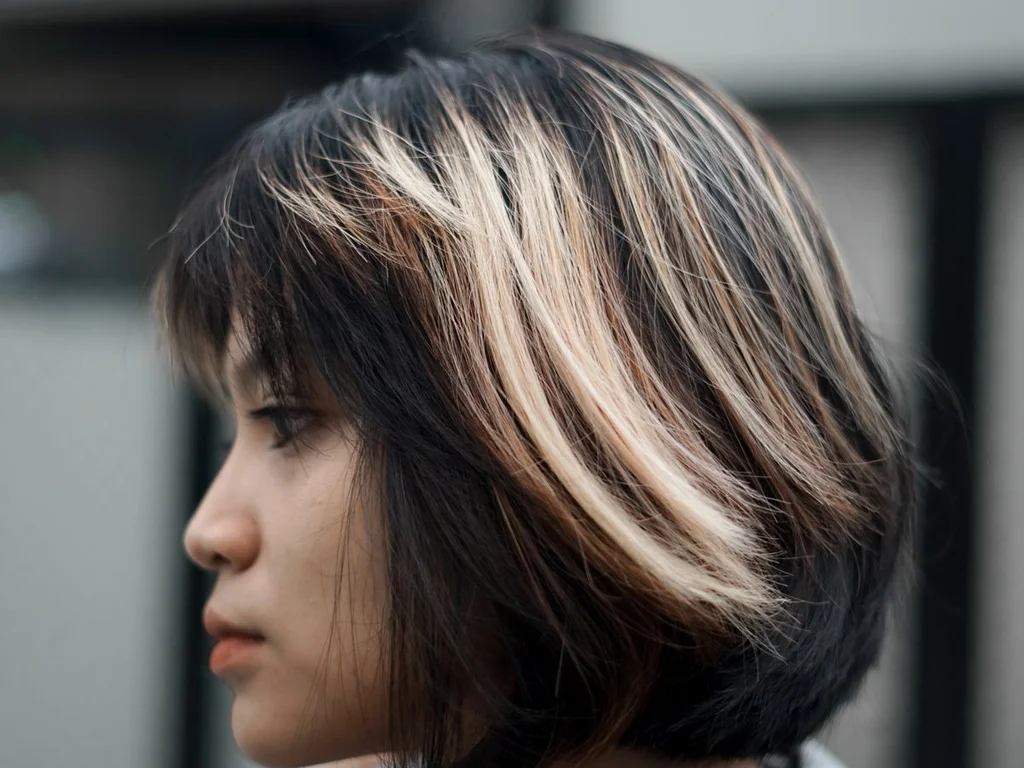
The mocha balayage bob with root shadow works well when you want short hair with visible colour, because the mocha with a root shadow ribbons follow the shape of the bob with a darker root shadow that blends into lighter ends instead of sitting flat on top of it. Lighter pieces are placed where light hits first, around the face, through the top layers and at the ends, while the base stays a rich, darker mocha that gives the style depth. That contrast makes the hair look fuller, which helps hair that grows out fast and needs a forgiving grow-out, because one flat colour can make thin hair look thinner, while two or three close mocha tones create the look of thickness without adding weight. This idea suits all face shapes, especially oval and heart-shaped faces best, and it works for all skin tones, because the root stays close to natural colour, because warm coffee tones sit well against warm and neutral skin, and a stylist can cool the ribbons with an ash toner if your skin is cooler. For daily wear it is a safe, familiar look, smart enough for work and family events, yet fresh enough to feel current, because the balayage is soft and lived-in rather than striped or blocky.
The cut helps the colour last too, because short hair is trimmed often and each trim removes the oldest ends where colour fades first, so the ribbons stay cleaner if you trim every six to eight weeks. If you want a darker look for autumn or winter, mocha is a good middle step, darker than caramel blonde but lighter than jet black, with warmth but without strong red tones or the upkeep of very light blonde. Once the base is in place, you can change the shape later, from a bob to a lob or a shag, without starting the colour again, which makes this a useful first balayage. Bring two or three photos in daylight, point out whether you like the lighter ends, the face-framing pieces or the darker root most, and your stylist can place the colour where you will actually see it.
Ask your stylist for a mocha balayage with a root shadow, so the roots blend and you can wait longer between salon visits, and say it clearly at the start, because balayage depends on placement as much as on the shade name, and two stylists can mix different mochas from the same word. Bring a photo, ask for a strand test if you have used box colour before, and say how often you can return, because that changes the plan: if you can only visit every ten to twelve weeks, ask for a darker root shadow and softer ribbons. Maintenance is low, so wash two to three times a week with a colour-safe shampoo, use lukewarm water, and book a toner every 10 to 12 weeks to stop the ribbons turning brassy, especially if you swim, use heat often, or spend time in strong sun. A weekly mask and a heat protectant before a straightener or curling iron will help the colour stay rich, and you should avoid clarifying shampoo at every wash, because it strips toner faster than a gentle, sulphate-free wash. Grow-out is forgiving here, because the root stays dark and the balayage starts lower down, so new growth blends in instead of showing a hard line, and most people wait eight to twelve weeks between colour visits, with only a toner and a trim in between.
At home, use a round brush on low heat for a smooth finish, or sea salt spray and a quick scrunch for a wavy, lived-in look, and let the layers do the work instead of piling on wax or oil, which can weigh short hair down and hide the dimension. If the colour turns warm after a few weeks, do not fix it with a box dye, which can patch the balayage and make the next salon visit harder; book a gloss or toner instead, which takes about twenty minutes and restores the tone you started with. Ask for a clear price before the service, including toner and cut, because cost varies by salon, city and hair thickness, and ask what a toner-only visit costs so you can plan the upkeep. Keep a daylight photo after the appointment, compare it after four weeks, and show your stylist how it faded, so the next toner and timing can be chosen with real evidence rather than guesswork.
14. Warm Mocha Lob with Beach Waves

The warm mocha lob with beach waves works well when you want short hair with visible colour, because the warm mocha ribbons follow the shape of the lob with loose beach waves instead of sitting flat on top of it. Lighter pieces are placed where light hits first, around the face, through the top layers and at the ends, while the base stays a rich, darker mocha that gives the style depth. That contrast makes the hair look fuller, which helps medium hair with a natural wave, because one flat colour can make thin hair look thinner, while two or three close mocha tones create the look of thickness without adding weight. This idea suits long and oval faces best, and it works for warm skin tones with a summer tan, because warm coffee tones sit well against warm and neutral skin, and a stylist can cool the ribbons with an ash toner if your skin is cooler. For daily wear it is a safe, familiar look, smart enough for work and family events, yet fresh enough to feel current, because the balayage is soft and lived-in rather than striped or blocky. The cut helps the colour last too, because short hair is trimmed often and each trim removes the oldest ends where colour fades first, so the ribbons stay cleaner if you trim every six to eight weeks.
If you want a darker look for autumn or winter, mocha is a good middle step, darker than caramel blonde but lighter than jet black, with warmth but without strong red tones or the upkeep of very light blonde. Once the base is in place, you can change the shape later, from a bob to a lob or a shag, without starting the colour again, which makes this a useful first balayage. Bring two or three photos in daylight, point out whether you like the lighter ends, the face-framing pieces or the darker root most, and your stylist can place the colour where you will actually see it.
Ask your stylist for a warm mocha balayage on a lob with beach waves, with lighter ends that look sun-kissed, and say it clearly at the start, because balayage depends on placement as much as on the shade name, and two stylists can mix different mochas from the same word. Bring a photo, ask for a strand test if you have used box colour before, and say how often you can return, because that changes the plan: if you can only visit every ten to twelve weeks, ask for a darker root shadow and softer ribbons. Maintenance is low, so wash two to three times a week with a colour-safe shampoo, use lukewarm water, and book a toner every 8 to 12 weeks to stop the ribbons turning brassy, especially if you swim, use heat often, or spend time in strong sun. A weekly mask and a heat protectant before a straightener or curling iron will help the colour stay rich, and you should avoid clarifying shampoo at every wash, because it strips toner faster than a gentle, sulphate-free wash. Grow-out is forgiving here, because the root stays dark and the balayage starts lower down, so new growth blends in instead of showing a hard line, and most people wait eight to twelve weeks between colour visits, with only a toner and a trim in between.
At home, use a round brush on low heat for a smooth finish, or sea salt spray and a quick scrunch for a wavy, lived-in look, and let the layers do the work instead of piling on wax or oil, which can weigh short hair down and hide the dimension. If the colour turns warm after a few weeks, do not fix it with a box dye, which can patch the balayage and make the next salon visit harder; book a gloss or toner instead, which takes about twenty minutes and restores the tone you started with. Ask for a clear price before the service, including toner and cut, because cost varies by salon, city and hair thickness, and ask what a toner-only visit costs so you can plan the upkeep. Keep a daylight photo after the appointment, compare it after four weeks, and show your stylist how it faded, so the next toner and timing can be chosen with real evidence rather than guesswork.
15. Cool-Toned Mocha Bob with Ash Ribbons

The cool-toned mocha bob with ash ribbons works well when you want short hair with visible colour, because the cool-toned mocha with ash ribbons ribbons follow the shape of the bob with cool ash ribbons through a mocha base instead of sitting flat on top of it. Lighter pieces are placed where light hits first, around the face, through the top layers and at the ends, while the base stays a rich, darker mocha that gives the style depth. That contrast makes the hair look fuller, which helps straight hair that turns brassy easily, because one flat colour can make thin hair look thinner, while two or three close mocha tones create the look of thickness without adding weight. This idea suits oval and square faces best, and it works for cool skin tones with pink undertones, because warm coffee tones sit well against warm and neutral skin, and a stylist can cool the ribbons with an ash toner if your skin is cooler. For daily wear it is a safe, familiar look, smart enough for work and family events, yet fresh enough to feel current, because the balayage is soft and lived-in rather than striped or blocky. The cut helps the colour last too, because short hair is trimmed often and each trim removes the oldest ends where colour fades first, so the ribbons stay cleaner if you trim every six to eight weeks.
If you want a darker look for autumn or winter, mocha is a good middle step, darker than caramel blonde but lighter than jet black, with warmth but without strong red tones or the upkeep of very light blonde. Once the base is in place, you can change the shape later, from a bob to a lob or a shag, without starting the colour again, which makes this a useful first balayage. Bring two or three photos in daylight, point out whether you like the lighter ends, the face-framing pieces or the darker root most, and your stylist can place the colour where you will actually see it.
Ask your stylist for a cool-toned mocha balayage with ash ribbons, and ask for a cool toner to keep brassiness away, and say it clearly at the start, because balayage depends on placement as much as on the shade name, and two stylists can mix different mochas from the same word. Bring a photo, ask for a strand test if you have used box colour before, and say how often you can return, because that changes the plan: if you can only visit every ten to twelve weeks, ask for a darker root shadow and softer ribbons. Maintenance is medium, so wash two to three times a week with a colour-safe shampoo, use lukewarm water, and book a toner every 6 to 8 weeks to stop the ribbons turning brassy, especially if you swim, use heat often, or spend time in strong sun. A weekly mask and a heat protectant before a straightener or curling iron will help the colour stay rich, and you should avoid clarifying shampoo at every wash, because it strips toner faster than a gentle, sulphate-free wash. Grow-out is forgiving here, because the root stays dark and the balayage starts lower down, so new growth blends in instead of showing a hard line, and most people wait eight to twelve weeks between colour visits, with only a toner and a trim in between.
At home, use a round brush on low heat for a smooth finish, or sea salt spray and a quick scrunch for a wavy, lived-in look, and let the layers do the work instead of piling on wax or oil, which can weigh short hair down and hide the dimension. If the colour turns warm after a few weeks, do not fix it with a box dye, which can patch the balayage and make the next salon visit harder; book a gloss or toner instead, which takes about twenty minutes and restores the tone you started with. Ask for a clear price before the service, including toner and cut, because cost varies by salon, city and hair thickness, and ask what a toner-only visit costs so you can plan the upkeep. Keep a daylight photo after the appointment, compare it after four weeks, and show your stylist how it faded, so the next toner and timing can be chosen with real evidence rather than guesswork.
16. Mocha Balayage Short Shag for Thick Hair

The mocha balayage short shag for thick hair works well when you want short hair with visible colour, because the mocha ribbons follow the shape of the short shag with lots of layers to remove bulk instead of sitting flat on top of it. Lighter pieces are placed where light hits first, around the face, through the top layers and at the ends, while the base stays a rich, darker mocha that gives the style depth. That contrast makes the hair look fuller, which helps very thick hair that feels heavy in a bob, because one flat colour can make thin hair look thinner, while two or three close mocha tones create the look of thickness without adding weight. This idea suits round and heart-shaped faces best, and it works for warm and neutral skin tones, because warm coffee tones sit well against warm and neutral skin, and a stylist can cool the ribbons with an ash toner if your skin is cooler. For daily wear it is a safe, familiar look, smart enough for work and family events, yet fresh enough to feel current, because the balayage is soft and lived-in rather than striped or blocky. The cut helps the colour last too, because short hair is trimmed often and each trim removes the oldest ends where colour fades first, so the ribbons stay cleaner if you trim every six to eight weeks.
If you want a darker look for autumn or winter, mocha is a good middle step, darker than caramel blonde but lighter than jet black, with warmth but without strong red tones or the upkeep of very light blonde. Once the base is in place, you can change the shape later, from a bob to a lob or a shag, without starting the colour again, which makes this a useful first balayage. Bring two or three photos in daylight, point out whether you like the lighter ends, the face-framing pieces or the darker root most, and your stylist can place the colour where you will actually see it.
Ask your stylist for a mocha balayage on a short shag, with layers that remove weight and ribbons that show the shape of the cut, and say it clearly at the start, because balayage depends on placement as much as on the shade name, and two stylists can mix different mochas from the same word. Bring a photo, ask for a strand test if you have used box colour before, and say how often you can return, because that changes the plan: if you can only visit every ten to twelve weeks, ask for a darker root shadow and softer ribbons. Maintenance is low to medium, so wash two to three times a week with a colour-safe shampoo, use lukewarm water, and book a toner every 8 to 10 weeks to stop the ribbons turning brassy, especially if you swim, use heat often, or spend time in strong sun. A weekly mask and a heat protectant before a straightener or curling iron will help the colour stay rich, and you should avoid clarifying shampoo at every wash, because it strips toner faster than a gentle, sulphate-free wash. Grow-out is forgiving here, because the root stays dark and the balayage starts lower down, so new growth blends in instead of showing a hard line, and most people wait eight to twelve weeks between colour visits, with only a toner and a trim in between.
At home, use a round brush on low heat for a smooth finish, or sea salt spray and a quick scrunch for a wavy, lived-in look, and let the layers do the work instead of piling on wax or oil, which can weigh short hair down and hide the dimension. If the colour turns warm after a few weeks, do not fix it with a box dye, which can patch the balayage and make the next salon visit harder; book a gloss or toner instead, which takes about twenty minutes and restores the tone you started with. Ask for a clear price before the service, including toner and cut, because cost varies by salon, city and hair thickness, and ask what a toner-only visit costs so you can plan the upkeep. Keep a daylight photo after the appointment, compare it after four weeks, and show your stylist how it faded, so the next toner and timing can be chosen with real evidence rather than guesswork.
17. Chocolate Mocha Bob with Bangs

The chocolate mocha bob with bangs works well when you want short hair with visible colour, because the chocolate mocha ribbons follow the shape of the bob with soft, straight-across bangs instead of sitting flat on top of it. Lighter pieces are placed where light hits first, around the face, through the top layers and at the ends, while the base stays a rich, darker mocha that gives the style depth. That contrast makes the hair look fuller, which helps straight hair with a smooth texture, because one flat colour can make thin hair look thinner, while two or three close mocha tones create the look of thickness without adding weight. This idea suits long and oval faces best, and it works for warm and neutral skin tones, because warm coffee tones sit well against warm and neutral skin, and a stylist can cool the ribbons with an ash toner if your skin is cooler. For daily wear it is a safe, familiar look, smart enough for work and family events, yet fresh enough to feel current, because the balayage is soft and lived-in rather than striped or blocky. The cut helps the colour last too, because short hair is trimmed often and each trim removes the oldest ends where colour fades first, so the ribbons stay cleaner if you trim every six to eight weeks.
If you want a darker look for autumn or winter, mocha is a good middle step, darker than caramel blonde but lighter than jet black, with warmth but without strong red tones or the upkeep of very light blonde. Once the base is in place, you can change the shape later, from a bob to a lob or a shag, without starting the colour again, which makes this a useful first balayage. Bring two or three photos in daylight, point out whether you like the lighter ends, the face-framing pieces or the darker root most, and your stylist can place the colour where you will actually see it.
Ask your stylist for a chocolate mocha balayage on a bob with bangs, with the lightest ribbons around the face and bangs, and say it clearly at the start, because balayage depends on placement as much as on the shade name, and two stylists can mix different mochas from the same word. Bring a photo, ask for a strand test if you have used box colour before, and say how often you can return, because that changes the plan: if you can only visit every ten to twelve weeks, ask for a darker root shadow and softer ribbons. Maintenance is medium, so wash two to three times a week with a colour-safe shampoo, use lukewarm water, and book a toner every 8 to 10 weeks to stop the ribbons turning brassy, especially if you swim, use heat often, or spend time in strong sun. A weekly mask and a heat protectant before a straightener or curling iron will help the colour stay rich, and you should avoid clarifying shampoo at every wash, because it strips toner faster than a gentle, sulphate-free wash. Grow-out is forgiving here, because the root stays dark and the balayage starts lower down, so new growth blends in instead of showing a hard line, and most people wait eight to twelve weeks between colour visits, with only a toner and a trim in between.
At home, use a round brush on low heat for a smooth finish, or sea salt spray and a quick scrunch for a wavy, lived-in look, and let the layers do the work instead of piling on wax or oil, which can weigh short hair down and hide the dimension. If the colour turns warm after a few weeks, do not fix it with a box dye, which can patch the balayage and make the next salon visit harder; book a gloss or toner instead, which takes about twenty minutes and restores the tone you started with. Ask for a clear price before the service, including toner and cut, because cost varies by salon, city and hair thickness, and ask what a toner-only visit costs so you can plan the upkeep. Keep a daylight photo after the appointment, compare it after four weeks, and show your stylist how it faded, so the next toner and timing can be chosen with real evidence rather than guesswork.
18. Espresso Mocha Curly Pixie with Defined Curls

The espresso mocha curly pixie with defined curls works well when you want short hair with visible colour, because the espresso mocha ribbons follow the shape of the curly pixie cut to follow the natural curl pattern instead of sitting flat on top of it. Lighter pieces are placed where light hits first, around the face, through the top layers and at the ends, while the base stays a rich, darker mocha that gives the style depth. That contrast makes the hair look fuller, which helps tight curls, type 3B to 4A, because one flat colour can make thin hair look thinner, while two or three close mocha tones create the look of thickness without adding weight. This idea suits heart-shaped and oval faces best, and it works for medium to deep skin tones, because warm coffee tones sit well against warm and neutral skin, and a stylist can cool the ribbons with an ash toner if your skin is cooler. For daily wear it is a safe, familiar look, smart enough for work and family events, yet fresh enough to feel current, because the balayage is soft and lived-in rather than striped or blocky. The cut helps the colour last too, because short hair is trimmed often and each trim removes the oldest ends where colour fades first, so the ribbons stay cleaner if you trim every six to eight weeks.
If you want a darker look for autumn or winter, mocha is a good middle step, darker than caramel blonde but lighter than jet black, with warmth but without strong red tones or the upkeep of very light blonde. Once the base is in place, you can change the shape later, from a bob to a lob or a shag, without starting the colour again, which makes this a useful first balayage. Bring two or three photos in daylight, point out whether you like the lighter ends, the face-framing pieces or the darker root most, and your stylist can place the colour where you will actually see it.
Ask your stylist for an espresso mocha balayage on a curly pixie, painted on dry curls so each ribbon lands where the curls fall, and say it clearly at the start, because balayage depends on placement as much as on the shade name, and two stylists can mix different mochas from the same word. Bring a photo, ask for a strand test if you have used box colour before, and say how often you can return, because that changes the plan: if you can only visit every ten to twelve weeks, ask for a darker root shadow and softer ribbons. Maintenance is medium, so wash two to three times a week with a colour-safe shampoo, use lukewarm water, and book a toner every 8 to 10 weeks to stop the ribbons turning brassy, especially if you swim, use heat often, or spend time in strong sun. A weekly mask and a heat protectant before a straightener or curling iron will help the colour stay rich, and you should avoid clarifying shampoo at every wash, because it strips toner faster than a gentle, sulphate-free wash. Grow-out is forgiving here, because the root stays dark and the balayage starts lower down, so new growth blends in instead of showing a hard line, and most people wait eight to twelve weeks between colour visits, with only a toner and a trim in between.
At home, use a round brush on low heat for a smooth finish, or sea salt spray and a quick scrunch for a wavy, lived-in look, and let the layers do the work instead of piling on wax or oil, which can weigh short hair down and hide the dimension. If the colour turns warm after a few weeks, do not fix it with a box dye, which can patch the balayage and make the next salon visit harder; book a gloss or toner instead, which takes about twenty minutes and restores the tone you started with. Ask for a clear price before the service, including toner and cut, because cost varies by salon, city and hair thickness, and ask what a toner-only visit costs so you can plan the upkeep. Keep a daylight photo after the appointment, compare it after four weeks, and show your stylist how it faded, so the next toner and timing can be chosen with real evidence rather than guesswork.
19. Soft Mocha Inverted Bob with Angled Ends

The soft mocha inverted bob with angled ends works well when you want short hair with visible colour, because the soft mocha ribbons follow the shape of the inverted bob, shorter at the back and angled to longer front pieces instead of sitting flat on top of it. Lighter pieces are placed where light hits first, around the face, through the top layers and at the ends, while the base stays a rich, darker mocha that gives the style depth. That contrast makes the hair look fuller, which helps straight to slightly wavy hair, because one flat colour can make thin hair look thinner, while two or three close mocha tones create the look of thickness without adding weight. This idea suits round and square faces best, and it works for fair to medium skin tones, because warm coffee tones sit well against warm and neutral skin, and a stylist can cool the ribbons with an ash toner if your skin is cooler. For daily wear it is a safe, familiar look, smart enough for work and family events, yet fresh enough to feel current, because the balayage is soft and lived-in rather than striped or blocky. The cut helps the colour last too, because short hair is trimmed often and each trim removes the oldest ends where colour fades first, so the ribbons stay cleaner if you trim every six to eight weeks.
If you want a darker look for autumn or winter, mocha is a good middle step, darker than caramel blonde but lighter than jet black, with warmth but without strong red tones or the upkeep of very light blonde. Once the base is in place, you can change the shape later, from a bob to a lob or a shag, without starting the colour again, which makes this a useful first balayage. Bring two or three photos in daylight, point out whether you like the lighter ends, the face-framing pieces or the darker root most, and your stylist can place the colour where you will actually see it.
Ask your stylist for a soft mocha balayage on an inverted bob, with the lightest colour on the longer front pieces, and say it clearly at the start, because balayage depends on placement as much as on the shade name, and two stylists can mix different mochas from the same word. Bring a photo, ask for a strand test if you have used box colour before, and say how often you can return, because that changes the plan: if you can only visit every ten to twelve weeks, ask for a darker root shadow and softer ribbons. Maintenance is low to medium, so wash two to three times a week with a colour-safe shampoo, use lukewarm water, and book a toner every 8 to 10 weeks to stop the ribbons turning brassy, especially if you swim, use heat often, or spend time in strong sun. A weekly mask and a heat protectant before a straightener or curling iron will help the colour stay rich, and you should avoid clarifying shampoo at every wash, because it strips toner faster than a gentle, sulphate-free wash. Grow-out is forgiving here, because the root stays dark and the balayage starts lower down, so new growth blends in instead of showing a hard line, and most people wait eight to twelve weeks between colour visits, with only a toner and a trim in between.
At home, use a round brush on low heat for a smooth finish, or sea salt spray and a quick scrunch for a wavy, lived-in look, and let the layers do the work instead of piling on wax or oil, which can weigh short hair down and hide the dimension. If the colour turns warm after a few weeks, do not fix it with a box dye, which can patch the balayage and make the next salon visit harder; book a gloss or toner instead, which takes about twenty minutes and restores the tone you started with. Ask for a clear price before the service, including toner and cut, because cost varies by salon, city and hair thickness, and ask what a toner-only visit costs so you can plan the upkeep. Keep a daylight photo after the appointment, compare it after four weeks, and show your stylist how it faded, so the next toner and timing can be chosen with real evidence rather than guesswork.
20. Mocha Balayage Bob for Women Over 50 with Grey Blending
The mocha balayage bob for women over 50 with grey blending works well when you want short hair with visible colour, because the soft mocha with grey blending ribbons follow the shape of the bob with soft layers and grey blending at the roots instead of sitting flat on top of it. Lighter pieces are placed where light hits first, around the face, through the top layers and at the ends, while the base stays a rich, darker mocha that gives the style depth. That contrast makes the hair look fuller, which helps greying hair that needs soft coverage without a harsh line, because one flat colour can make thin hair look thinner, while two or three close mocha tones create the look of thickness without adding weight. This idea suits oval and heart-shaped faces best, and it works for fair to medium skin tones with grey or silver hair coming through, because warm coffee tones sit well against warm and neutral skin, and a stylist can cool the ribbons with an ash toner if your skin is cooler. For daily wear it is a safe, familiar look, smart enough for work and family events, yet fresh enough to feel current, because the balayage is soft and lived-in rather than striped or blocky.
The cut helps the colour last too, because short hair is trimmed often and each trim removes the oldest ends where colour fades first, so the ribbons stay cleaner if you trim every six to eight weeks. If you want a darker look for autumn or winter, mocha is a good middle step, darker than caramel blonde but lighter than jet black, with warmth but without strong red tones or the upkeep of very light blonde. Once the base is in place, you can change the shape later, from a bob to a lob or a shag, without starting the colour again, which makes this a useful first balayage. Bring two or three photos in daylight, point out whether you like the lighter ends, the face-framing pieces or the darker root most, and your stylist can place the colour where you will actually see it.
Ask your stylist for a soft mocha balayage with grey blending on a bob, so new grey grows in softly instead of showing a hard line, and say it clearly at the start, because balayage depends on placement as much as on the shade name, and two stylists can mix different mochas from the same word. Bring a photo, ask for a strand test if you have used box colour before, and say how often you can return, because that changes the plan: if you can only visit every ten to twelve weeks, ask for a darker root shadow and softer ribbons. Maintenance is low, so wash two to three times a week with a colour-safe shampoo, use lukewarm water, and book a toner every 8 to 12 weeks to stop the ribbons turning brassy, especially if you swim, use heat often, or spend time in strong sun. A weekly mask and a heat protectant before a straightener or curling iron will help the colour stay rich, and you should avoid clarifying shampoo at every wash, because it strips toner faster than a gentle, sulphate-free wash. Grow-out is forgiving here, because the root stays dark and the balayage starts lower down, so new growth blends in instead of showing a hard line, and most people wait eight to twelve weeks between colour visits, with only a toner and a trim in between.
At home, use a round brush on low heat for a smooth finish, or sea salt spray and a quick scrunch for a wavy, lived-in look, and let the layers do the work instead of piling on wax or oil, which can weigh short hair down and hide the dimension. If the colour turns warm after a few weeks, do not fix it with a box dye, which can patch the balayage and make the next salon visit harder; book a gloss or toner instead, which takes about twenty minutes and restores the tone you started with. Ask for a clear price before the service, including toner and cut, because cost varies by salon, city and hair thickness, and ask what a toner-only visit costs so you can plan the upkeep. Keep a daylight photo after the appointment, compare it after four weeks, and show your stylist how it faded, so the next toner and timing can be chosen with real evidence rather than guesswork.
Mocha vs Chocolate vs Espresso Balayage: Which Shade Should You Choose?
Use this table before you book, because the three names sound similar but the base, the warmth and the upkeep are different. Mocha is the middle shade, chocolate is warmer and softer, and espresso is deeper and cooler, and the right one depends on your natural colour and how much contrast you want.
| Shade | Base colour | Best skin tone | Upkeep | Best for short hair |
|---|---|---|---|---|
| Mocha balayage | Warm brown with coffee tones | Warm and neutral | Low to medium, toner every 8 to 10 weeks | Bob, lob, shag — adds dimension without harsh lines |
| Chocolate balayage | Rich chocolate brown, softer and warmer | Warm, golden undertones | Low, toner every 10 to 12 weeks | Soft bob, French bob, wavy bob — gentle, natural finish |
| Espresso balayage | Deep, dark brown, almost black-brown | Cool and neutral | Low to medium, toner every 8 to 10 weeks | Sleek bob, pixie — glossy, rich finish that looks polished |
Maintenance and Touch-Up Schedule by Hair Type
Short hair needs regular trims, but colour visits can be spaced out if the root shadow is kept dark. Use this schedule as a starting point and adjust it with your stylist after your first month, when you can see how fast your shade fades. For colour-safe care, the guides at Allure and Byrdie are useful places to check current product advice, while Redken has helpful notes on toner and colour care from a salon brand. Links here go to each publisher’s home page.
| Hair type | Toner | Colour touch-up | Shampoo | Styling tip |
|---|---|---|---|---|
| Fine / straight | Every 8 to 10 weeks | Every 10 to 12 weeks | Colour-safe, sulphate-free, light volume shampoo | Round brush, low heat, avoid heavy oils |
| Medium / wavy | Every 8 to 12 weeks | Every 10 to 12 weeks | Colour-safe shampoo, weekly mask | Sea salt spray, scrunch, air dry when possible |
| Thick / coarse | Every 8 to 10 weeks | Every 8 to 12 weeks | Colour-safe shampoo, rich mask twice a week | Heat protectant, smooth with a brush, trim often |
| Curly (3A to 4A) | Every 8 to 10 weeks | Every 10 to 12 weeks | Colour-safe, curl-friendly shampoo, leave-in conditioner | Cut dry, define curls with cream, avoid brushing dry |
| Greying / over 50 | Every 8 to 12 weeks | Every 10 to 12 weeks, with grey blending | Colour-safe shampoo, purple shampoo only if advised | Soft layers, avoid very dark roots |
Frequently Asked Questions About Mocha Balayage for Short Hair
Is mocha balayage good for short hair?
Yes, it is one of the best balayage choices for short hair, because the hand-painted ribbons add depth and the look of thickness in a small space. A bob or pixie has less length to show colour, so the contrast between a darker mocha base and lighter ribbons does the work that length would do on long hair. Keep the root darker, put the lightest pieces around the face and at the ends, and trim every six to eight weeks to keep the shape clean.
How long does mocha balayage last on short hair?
Most people get eight to twelve weeks from a mocha balayage before they need a full colour service again, with a toner in between at six to ten weeks. Short hair is trimmed more often, which removes faded ends, so the colour can look fresh for longer than the same shade on long hair. Washing with colour-safe shampoo, using lukewarm water, and using heat protectant will help it last closer to twelve weeks.
Will mocha balayage make fine hair look fuller?
Yes, when the placement is right. Two or three closely related mocha tones create light and shadow through the layers, and your eye reads that as thickness. Ask for ribbons at the mid-lengths and around the face, avoid one flat colour, and ask for layers that lift the crown. Avoid heavy oils and waxes at home, because they weigh fine hair down and hide the dimension.
How much does mocha balayage cost for short hair?
Prices vary by salon, city and hair thickness, and short hair often costs less than long hair because less product and less time are needed. As a guide, ask for a price that includes the balayage, the toner, and the cut before you start, and ask what a toner-only visit costs. Get the price in writing at the consultation so there is no surprise at the end.
Does mocha balayage damage hair?
Any lightening can dry the hair if it is done too often or without care, but mocha balayage is usually gentler than a full blonde service because only some pieces are lightened and the base stays close to your natural colour. Tell your stylist about past colour, box dye, and heat use, ask for a bond treatment if your hair is fragile, and use a weekly mask and heat protectant at home.
Can I do mocha balayage at home?
You can do a soft version at home with a balayage kit, but the result is harder to control on short hair because the pieces are close together and mistakes show quickly. If you try it, do a strand test, work in small sections, keep the colour off the roots, and do not overlap old colour. For a first balayage, or if your hair is dark, previously coloured, or damaged, a salon visit is the safer choice.
What should I ask my stylist for?
Use the exact wording in the idea you liked best in this article, show two or three photos in daylight, and say how often you can return. For example, say you want a chocolate mocha balayage on a chin-length bob with soft layers and a root shadow, and that you want to wait ten weeks between visits. That gives the stylist the shade, the cut, the placement and the upkeep plan in one sentence.
Conclusion
If you have read through all 20 ideas, you will have noticed that mocha balayage for short hair is not one single look, and that is the point that matters most when you choose. A chocolate mocha bob, an espresso mocha pixie, a caramel mocha lob and a soft mocha French bob can all use the same family of shades, but they look very different because the cut, the placement of the lighter ribbons, and the amount of contrast change the result. The best choice is the one that fits your hair type, your face shape, your skin tone, and the time you are willing to spend on care each week, not the one that looks best on someone else in a photo taken in perfect salon light. Start with the base shade that is closest to your natural brown, ask for a root shadow if you want a forgiving grow-out, and keep the lightest pieces around the face and at the ends, where they will make the most difference to how full and bright your hair looks. Bring photos, use the exact words from the idea you liked best, and tell your stylist how often you can return, because those three steps do more to get the right result than any shade name on its own.
Short hair also gives you a useful advantage here, because regular trims remove the oldest ends, the colour stays cleaner, and you can change the shape at your next visit without starting the colour from scratch. If you are unsure between two ideas, choose the softer, lower-contrast one first, live with it for six weeks, and then go lighter or add more ribbons at the next appointment, because it is much easier to add light than to take it away. That slow, steady approach is how most people end up with a mocha balayage they actually like in daylight, at work, and in photos, not just in the salon chair on the first day.
To finish, keep the care simple and steady after you leave the salon, because good aftercare is what turns a good colour into a colour that still looks good eight weeks later. Wash less often, use lukewarm water, choose a colour-safe shampoo and a weekly mask, use heat protectant every time you use heat, and book a toner every six to twelve weeks depending on the idea you chose, as shown in the maintenance table in this article. Do not try to fix brassiness with a box dye, and do not skip trims, because short hair shows split ends and faded ends faster than long hair, and a small trim every six to eight weeks will keep the shape and the colour looking clean. If you want to keep exploring, the next articles in this Hair Highlights & Balayage pillar are 27 Gorgeous Mocha Balayage Hair Color Ideas for Long Hair for a Fresh Look, 23 Dreamy Mocha Balayage Hair Color for Women Over 50 to Try This Season, 30 Chic Mocha Balayage Hair Color for Summer 2026 That Turn Heads Instantly, and 26 Effortless Blonde Balayage Hair Color for Short Hair for Effortless Style, and the About Us page explains how this site chooses its ideas and tests them for real wear.
Save the idea you liked most, book a consultation if you are still unsure, and give the colour a few weeks to settle before you judge it, because mocha balayage often looks best after the first wash, when the toner has softened and the ribbons sit naturally in the cut. With the right shade, the right cut, and simple care at home, short hair can look fuller, brighter, and easier to style, and that is the result this guide was written to help you reach.
Related: Hair Highlights & Balayage | Hair Color Ideas | Short Hair Ideas | About Us